Spinal Manipulation in Bentonville and Springdale, AR
Your back is stiff in a way stretching has not touched. Spinal manipulation restores motion at the segment that stopped moving, and then we build the strength that makes it hold.
What spinal manipulation actually does
You have stretched it, rolled on it, and tried a different pillow. It still feels locked, and the stiffness is worst first thing in the morning or after you have been in one position too long. Spinal manipulation is one of the tools that addresses that directly, and it is also one of the most misunderstood. Here is a plain explanation of what it is, what changes when it works, what it will not do on its own, and where it fits into a plan that actually holds.
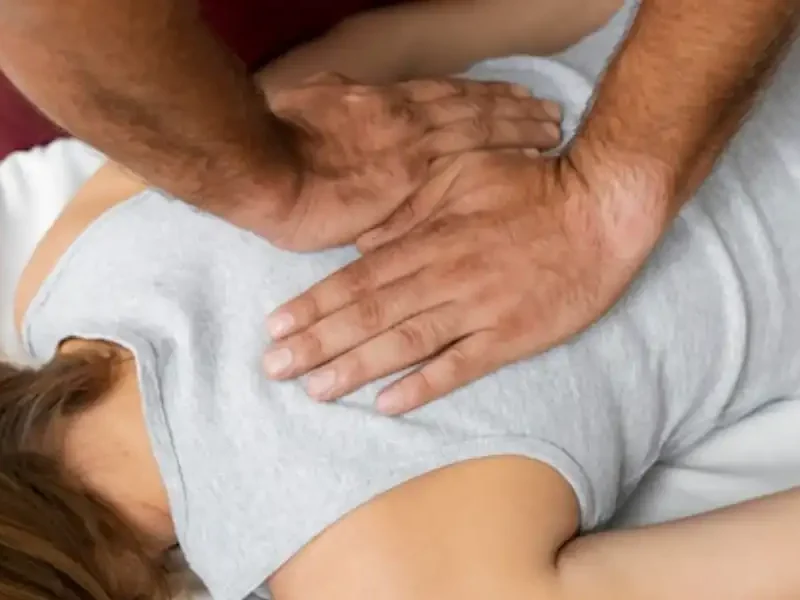
Spinal manipulation is a small, fast, carefully aimed movement applied to a single segment of the spine at the end of its available range. Your therapist positions you so the force reaches the level that is restricted and very little else. It is not force applied to your whole back, and it is not done the same way for every patient. The examination that comes first is what determines whether it is appropriate and exactly where.
The sound is a cavitation, a change of pressure inside the joint capsule that releases gas out of the fluid. It is not a bone going back into place, and nothing was out of place to begin with. Plenty of effective treatment makes no sound at all, and a loud one does not mean a better result. What matters is whether your motion and your symptoms changed afterward, which is exactly what we recheck before you leave.
Mobilization is slower, graded, and repeated: rhythmic pressure applied to a joint over seconds or minutes. Manipulation is the quick version at the end of the range. Both restore motion, and many patients receive mobilization only, either because it suits the tissue better or because it is the safer choice given their history. Neither one is a lesser treatment, and your therapist will tell you which you are getting and why.
Two things tend to change right away: how far the segment moves, and how sensitive it is. There is also a reflex effect on the muscles guarding around the joint, which is why the area often feels looser within a minute. That window of improved motion and reduced guarding is an opportunity rather than a finish line. It is the best moment to load the area and teach it a better pattern, which is why the exercise that follows is not optional.
Manipulation is not appropriate for everyone. Significant osteoporosis, certain inflammatory conditions, recent trauma or suspected fracture, some vascular histories, and any presentation with neurological warning signs all change the answer. Screening for that is part of the evaluation. If the screen says no, we say no and use another approach, and if something in your history belongs with a physician first, we tell you rather than treat around it.
A segment stiffens for a reason, usually because something above or below it stopped sharing the work, or because a pattern of loading kept it there. Manipulation on its own tends to feel excellent for a day or two and then fade, which is the experience most people describe from repeat visits somewhere with no exercise attached. Restoring the motion and then strengthening what surrounds it is what makes the change last. That is the difference in how we use it.
How physical therapy in Bentonville and Springdale helps.
Manipulation is one technique inside a full evaluation, not the reason for the visit. We assess how each region of your spine and your hips move, find the segments that are restricted and the ones compensating by moving too much, and treat accordingly. Some patients get manipulation, some get graded mobilization, and everyone gets the strength and motor control work that keeps the result. Your therapist rechecks your motion in the same visit, so you can feel what changed instead of taking our word for it. Arkansas is a direct access state, so no referral is needed to start, and we are in network with BCBS, Medicare, TRICARE, Humana, Ambetter, ARKids First, AAA, and Workers' Compensation.
What to expect in a session.
Examination comes first
Before anything is manipulated we take your history, screen for the conditions that rule the technique out, test how each level of your spine moves, and check strength and neurological signs. That exam tells us whether manipulation is appropriate at all and, if it is, exactly where. You hear what we found in plain language.
Treatment and recheck
You are positioned so the force reaches the restricted segment and little else. It takes about a second. Then we retest the motion that was limited, in the same visit, so the change is something you can feel. If manipulation is not the right tool for you, graded mobilization does the same job more gradually.
Make it hold
The rest of the visit goes into loading the area you just freed up and strengthening what surrounds it, plus a short home program you can run between visits. Motion without strength comes back stiff. Motion with strength stays.
The PT's at Russ Physical Therapy are awesome! They care about their patients and their customer service is the best!
Pain rarely travels alone.

Back Pain & Sciatica
Low back stiffness and leg symptoms often start at segments that stopped moving. Start with the exam.
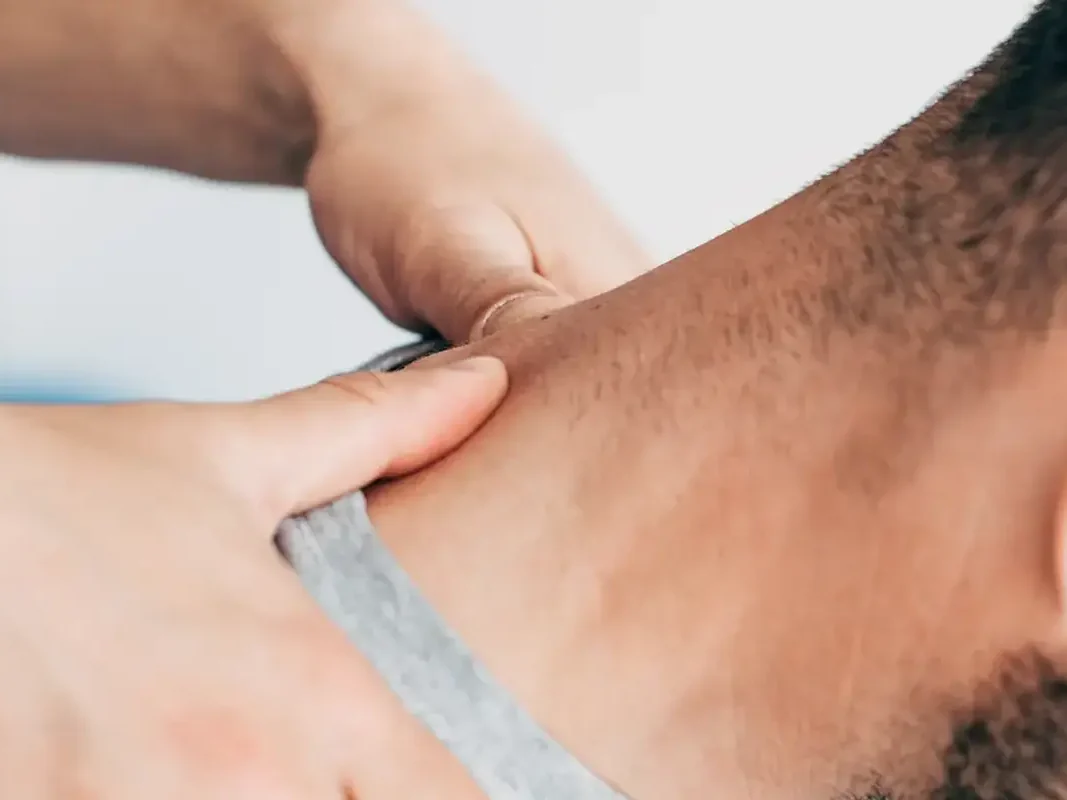
Neck Pain
Stiff upper neck segments refer pain into the head. Restoring motion there changes more than the neck.

Joint Pain
The same principle applies away from the spine. Restore the motion, then build the strength that keeps it.
Ready when you are.
Fri: 8:00am - 1:30pm