Vestibular Therapy in Bentonville and Springdale, AR
Rooms that spin. Floors that feel unsteady. A head turn that sets the whole day off. Vestibular therapy retrains the system that keeps you oriented.

What is vestibular therapy?
You have already been told your bloodwork is fine and the scan looks normal. You are still holding the wall when you stand up, still turning your whole body instead of your head, still doing the math on whether you can drive today. Vestibular therapy treats the balance system itself. Your sense of where you are in space comes from three inputs working together: the inner ear, your eyes, and the position sensors in your joints. When the inner ear sends a bad signal, or when the three stop agreeing with each other, the result is spinning, floating, unsteadiness, or that fog that shows up in a busy grocery aisle. Your therapist works out which of those inputs is misbehaving, then uses specific head, eye, and body movements to either reposition what is loose or retrain the brain to trust the signals it can still rely on. It is exercise, not medication, and it is very targeted.
This is a genuine strength at Russ Physical Therapy. A clinician on our team holds Certified Level 1 and Level 2 Vestibular Therapist credentials through FYZICAL and a Brain Injury Certificate through the APTA, with a year of practice focused specifically on vestibular rehabilitation. That matters because dizziness has several very different causes, and the treatment for crystals loose in the inner ear looks nothing like the treatment for a concussion or for a balance system that has been slowly deconditioning for years. Getting the category right is most of the work.
Who vestibular therapy is for.
If dizziness has started shaping your decisions, what you drive, what you climb, whether you go out at all, it is worth having the balance system looked at properly.
The room spins when you roll over in bed
Short, violent spinning that fires when you lie down, roll to one side, or tip your head back to a shelf. That pattern usually points to positional vertigo, and it is assessed with specific head positions and treated with repositioning maneuvers rather than exercise. Many people notice a clear difference within a small number of visits.
Unsteady on your feet since an illness or a concussion
Not spinning exactly, just off. Busy places feel worse, scrolling on a phone feels worse, and you have started reaching for furniture. Gaze stability and habituation work gradually retrain the system so the everyday environment stops overwhelming it, and walking stops taking so much concentration.
Balance that has been slipping and a fall you have not mentioned
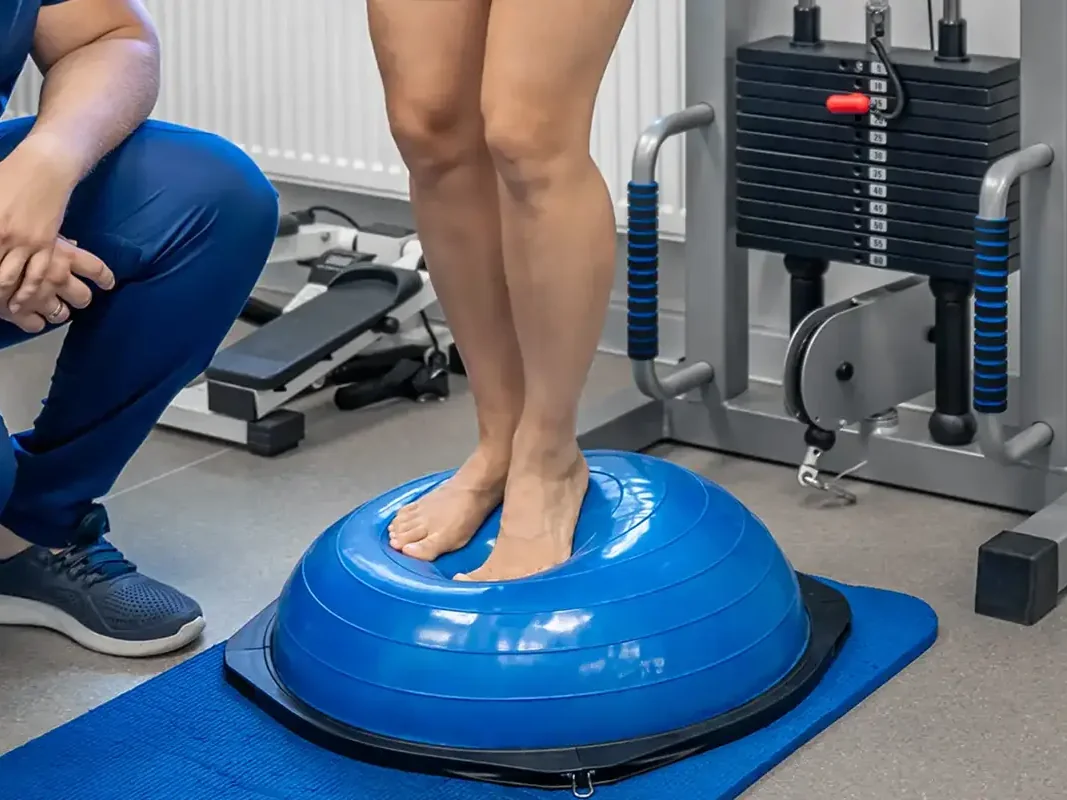
Maybe you caught yourself on the counter, or you had a fall you have not told your family about. Balance is trainable at any age. We test how you use vision, the inner ear, and your feet, then work the input that has gone quiet so the others stop carrying everything.
What to expect in a session.
The first visit is mostly detective work. Once we know which part of the system is off, the treatment gets very specific.
History and a careful examination
Your therapist asks what the dizziness actually feels like, what sets it off, and how long an episode lasts, because those answers separate the likely causes better than anything else. Then come balance tests, eye movement tests, and specific head positions to see what reproduces your symptoms. Bring your medication list and any notes from your physician.
Treatment matched to the finding
If the finding is positional, your therapist guides you through a repositioning maneuver right there on the table. If the system needs retraining, you start gaze stability, habituation, and balance work at a level you can tolerate. Sessions are one on one, and the same therapist stays with your case so nothing gets lost between visits.
Home program and steady progression
You leave with short exercises to do at home in small doses, several times a day, because frequency matters more than length with this work. Each visit your therapist checks what provoked symptoms and turns the difficulty up or down. Progress here is usually gradual rather than sudden, and it holds better for it.
Vestibular exercises can briefly make symptoms worse before they settle. That is expected. The work asks the balance system to face what it has been avoiding, so a short spell of dizziness or queasiness after a session is normal, and it usually eases within a few hours. Tell your therapist exactly how you felt afterward so the dose can be adjusted, and arrange a ride to your first visit if you are unsure about driving.
Went here for a long time, started out not walking, now I can do so much! Best people and great care. Very knowledgeable and listens to the needs of the patients to get them back to their best.
Where to go next.

Dizziness and Vertigo
What is actually behind the spinning, and how we sort one cause from another before treating it.
Balance and Gait Disorders
Unsteady walking and near falls are trainable problems. Here is how we build the confidence back.

Therapeutic Exercise
Balance needs strength underneath it. The coached exercise program that supports the rest of your care.
Ready when you are.
Fri: 8:00am - 1:30pm