Elbow, Wrist and Hand Pain in Bentonville and Springdale, AR
The jar lid. The coffee cup. The second half of your shift. Arm pain seems small until you notice it touches everything you do with your hands. A brace buys you time. Changing the load is what ends it.
What causes elbow, wrist, and hand pain?
You have already tried the brace, the ice, and taking a week off. It felt better, and then the first real day back brought it straight home again. That is the pattern with arm pain, and it happens because rest lowers the irritation without changing anything about the tendon, the nerve, or the way you load it. The elbow, wrist, and hand are one chain, and they answer to the shoulder and neck above them. Finding the actual source is what stops the cycle.
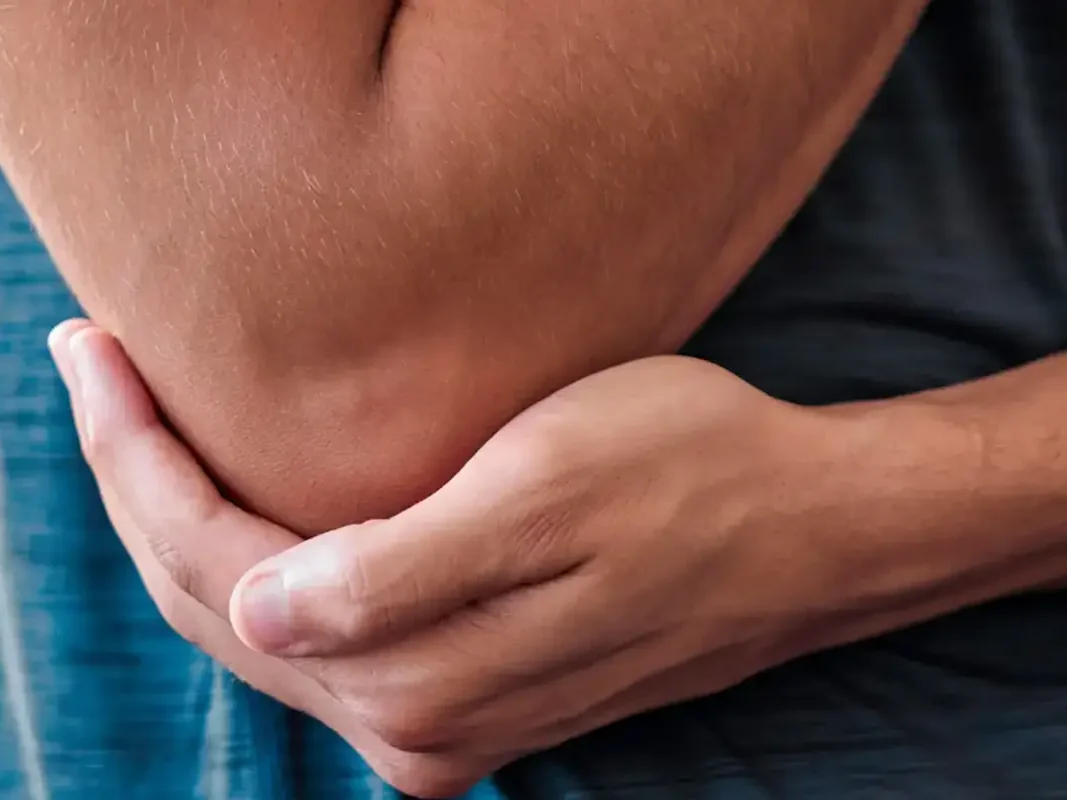
The tendons that lift your wrist and open your fingers all anchor to a small bump on the outside of the elbow. Every hard grip pulls on that anchor, which is why the sore spot is at the elbow while the work is being done by the hand. You do not have to play tennis to get it. Carpenters, electricians, hairdressers, and people who spend the day on a mouse get it constantly. It responds to progressive loading of the tendon, not to waiting.
Same story on the opposite side. The tendons that close your fingers and flex your wrist share an anchor on the inner elbow, and gripping combined with twisting loads it hardest. It hurts when you turn a wrench, carry a bag, or swing anything. Treatment looks similar to tennis elbow, but the strengthening targets a different set of muscles and the pattern we have to change is usually about how you rotate your forearm.
The median nerve runs through a narrow tunnel at the wrist. Swelling, a stiff wrist, or long hours in a bent position squeeze it, and the nerve responds with numbness, tingling, and a grip that drops things without warning. It classically wakes people at night. Nerves need to slide, not just stretch, so treatment combines specific nerve gliding, wrist and forearm mobility, and honest changes to what your hands do all day.
The thumb base and the finger joints take an enormous number of loading cycles over a lifetime, and they are common sites for arthritis. Pinching, opening jars, and turning keys become the tasks you plan around. These joints do best with movement and controlled strength work, plus practical changes to how you hold things so the same joint is not taking every load.
The tendons that run the thumb and fingers travel through tight sheaths at the wrist. A sudden increase in gripping, lifting, or repetitive thumb work irritates the sheath and every movement starts to catch or burn. New parents, warehouse workers, and anyone who just picked up a hobby involving their hands know this one well. Load management plus targeted soft tissue work settles it.
Nerves to your hand start in your neck. Grip strength depends on a shoulder that can hold position. If your shoulder blade is weak or your neck is irritated, your forearm compensates for both, and the forearm is the part that eventually complains. This is why a good evaluation looks above the painful area, and why numbness in the hand is not automatically carpal tunnel.
How physical therapy in Bentonville and Springdale helps.
Your evaluation starts by separating tendon pain from nerve pain from joint pain, because they behave differently and they are treated differently. Your therapist tests grip, checks how your forearm rotates, screens the neck and shoulder, and asks what your hands actually do between eight and five. From there, hands-on work comes first: soft tissue treatment, IASTM, joint mobilization, and dry needling where it fits (offered at our Bentonville clinic), all aimed at calming the tissue enough that you can start loading it.
Then comes the part that actually holds. Tendons get stronger only when they are loaded, gradually and on purpose, so the strengthening starts light and climbs on a schedule. Alongside it we change the mechanics that caused the problem: how you grip, how your wrist sits at a keyboard, how your shoulder supports your arm, how you set up your tools. Ergonomic changes are a real part of this, not an afterthought. Arkansas has direct access, so no referral is needed to book, and we verify your benefits before your first visit.
What to expect from your recovery.
Pain: calm the tissue
The first visits sort out what is actually irritated and get the irritation down far enough to work with. Hands-on treatment, soft tissue work, and gentle motion do most of that. You also get clear instructions on which activities to keep and which to pause for now, which is usually a shorter list than people expect.
Prime and perform: load it back up
Tendons and grip only rebuild under load, so this phase is progressive strengthening through the forearm, wrist, hand, and shoulder. It climbs deliberately, and mild soreness after a session is expected and monitored. Along the way we change the mechanics that overloaded the arm the first time.
Prevent: back to the full day
The last phase is measured against your real demands: a full shift, a full round, a full day at the keyboard, a full evening of guitar. You leave with a maintenance routine that takes minutes, plus setup changes for your desk or workspace so the same load pattern does not rebuild the same problem.
Knowledgeable, experienced, even fun when you're working your tail off. All of the People are kind and concerned about your health.
Pain rarely travels alone.
Shoulder Pain
A shoulder that cannot hold position makes your forearm do its work. Stubborn elbow pain often traces back up the arm.
Joint Pain
Thumb and finger joints take a lifetime of loading. When pinching and jar lids became the problem, the joints are the place to look.

Work Injuries
Most arm pain is built at work, one repetition at a time. If yours is a reported injury, we handle Workers' Compensation cases.
Ready when you are.
Fri: 8:00am - 1:30pm