Joint Mobilization in Bentonville and Springdale, AR
When a joint stops gliding, everything around it starts compensating. Joint mobilization gives the joint back the motion it actually lost.
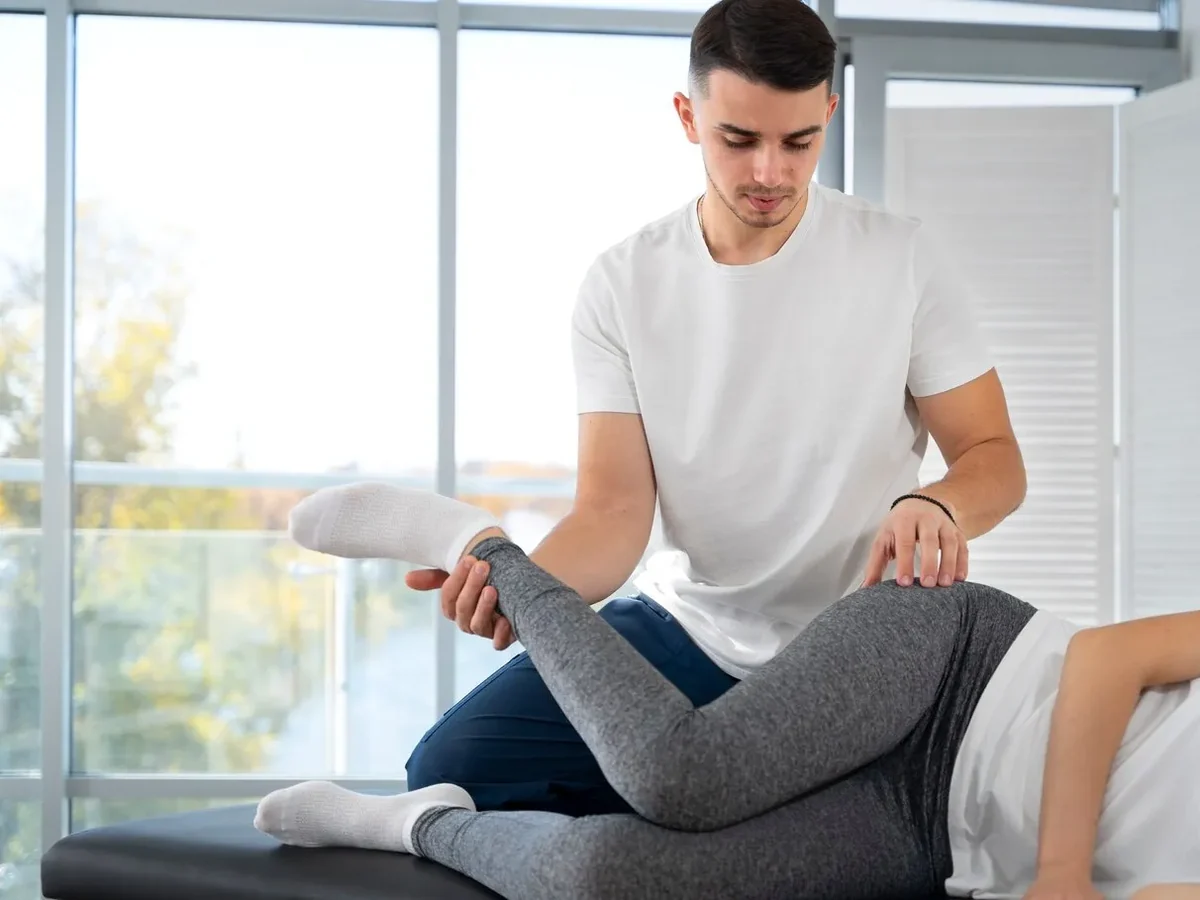
What is joint mobilization?
A healthy joint does more than bend. The surfaces inside it glide, spin, and slide against one another, and that small accessory motion is what lets the bend happen without pinching. After an injury, a stretch of time in a sling or a boot, or years spent in one repeated position, the glide is the first thing you lose. The visible range gets shorter, and something nearby has to make up the difference. Joint mobilization is a manual technique in which your licensed physical therapist applies a controlled, graded pressure to that joint to restore the glide. It is slow and rhythmic rather than sudden. There is no thrust, no forcing the end of the range, and no requirement that anything pop. Your therapist selects the direction and the grade based on what the joint is genuinely short of, which is why the assessment that comes first matters as much as the technique itself.
Mobilization is almost never used on its own. Opening a joint gives you access to range you have not had in a while, and range that never gets loaded quietly goes back where it came from. So the hands-on work is paired with exercise in the newly available range, and you go home with a way to hold it. Your therapist will also tell you honestly when the joint is not the limitation, because sometimes the restriction is muscle, and sometimes it is a joint that should be left alone.
Who joint mobilization is for.
Joint mobilization is for stiffness with a mechanical block, not for pain alone. If the joint stops short and the end of the motion feels hard rather than merely tight, it is worth having assessed.
A shoulder that will not go overhead
Reaching a top shelf, fastening a seat belt, or getting into a jacket has turned into a negotiation. Frozen and post-injury shoulders lose their glide in a fairly predictable pattern, and mobilization is aimed straight at it. Raising the arm without hiking the whole shoulder to get there is the goal, and most people track their own progress by that one movement.
A neck or mid back that turns only one way
You check the blind spot by rotating your whole torso. Desk work and old whiplash both produce this. Restoring motion in the segments that stopped moving usually takes the pressure off the one segment that has been doing double duty and aching about it. Driving stops being the thing that reminds you every single day.
A hip, knee, or ankle that stalled after an injury
The swelling is long gone and the strength is coming back, but the joint still stops short and you feel it on stairs or squatting down to a low shelf. Mobilization addresses the capsule and the glide that were lost while the joint was being protected. Getting up off the floor without planning the route first is a fair definition of finished.
What to expect in a session.
Nothing about mobilization should catch you off guard. Your therapist describes the technique before applying it, every time.
Finding the real restriction
Your therapist compares the joint against the other side, tests the accessory glides one direction at a time, and works out whether the block is joint, muscle, or protective guarding. That answer determines everything that follows, and you hear it in plain language rather than in a paragraph of terminology.
Graded hands-on mobilization
You are positioned so the joint is relaxed and fully supported. Your therapist applies steady, rhythmic pressure in the direction the joint is short, often for thirty seconds to a couple of minutes at a stretch, rechecking your motion between rounds. You stay in control and can ask them to ease off or stop at any point.
Loading the new range
The moment the range improves, you use it. Reaching, stepping, squatting, whatever that joint is actually for in your day. This is the part that decides whether the gain is still there next week, and it is why you leave with a short home program instead of instructions to rest.
Most people describe joint mobilization as firm pressure and a deep stretch rather than a sharp pain. You may hear or feel a small pop, and it is not required for the technique to have worked. Mild soreness or a heavy, worked feeling in the area for a day or so is normal, much like the day after starting a new exercise. What is not normal is sharp pain during the technique, numbness, or soreness that is worse on day three than it was on day one. Tell your therapist, or call the clinic at (479) 250-4014, and the approach gets adjusted.
I had very good results! No more pain in my shoulder and much better range of motion. Thanks to Emily and Thomas they are awesome! I would recommend them to anyone having pain.
Where to go next.
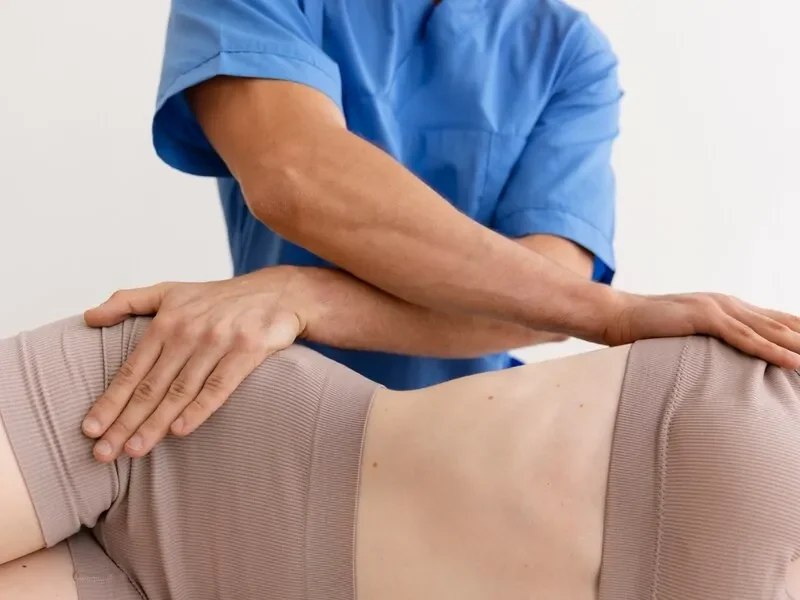
Manual Therapy
The wider hands-on toolkit, including soft tissue work and therapist-guided movement.
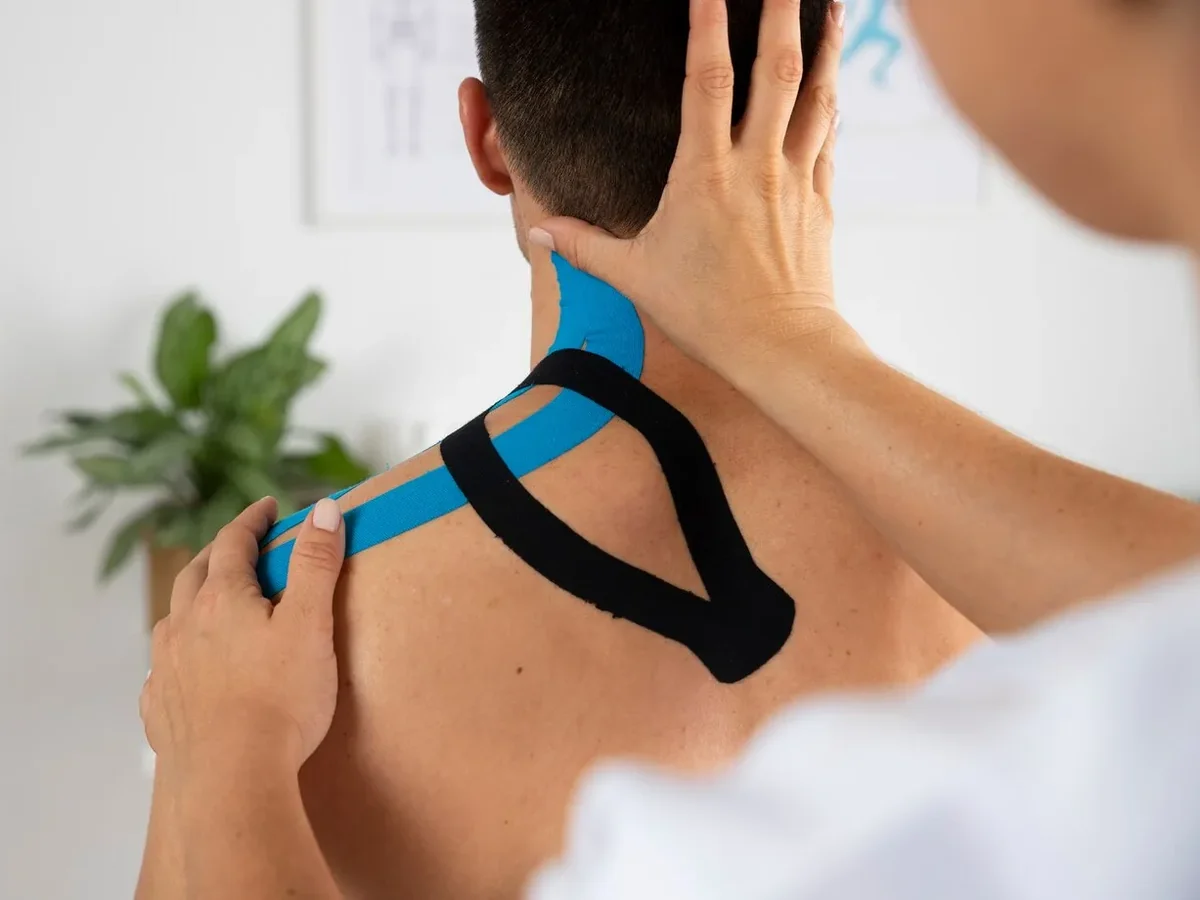
IASTM
Tool-assisted work on scar tissue and fascia when soft tissue is what limits the joint.
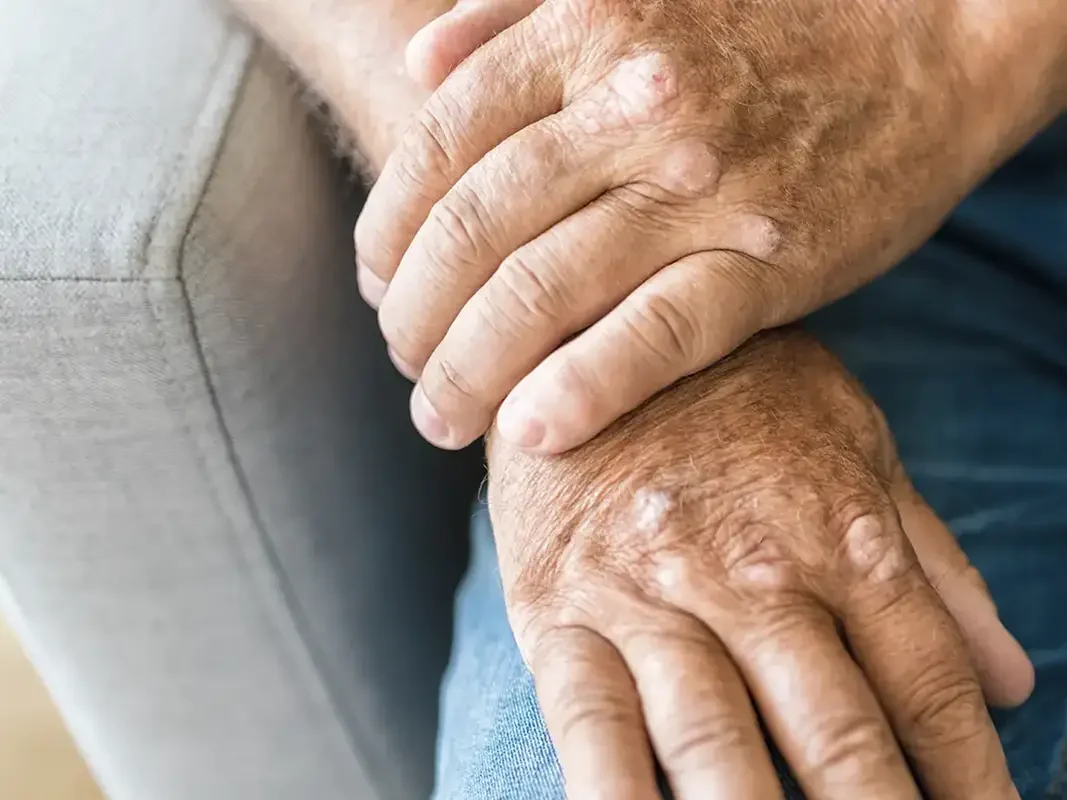
Arthritis
Stiff, arthritic joints usually do better with graded motion than with rest. Here is how.
Ready when you are.
Fri: 8:00am - 1:30pm